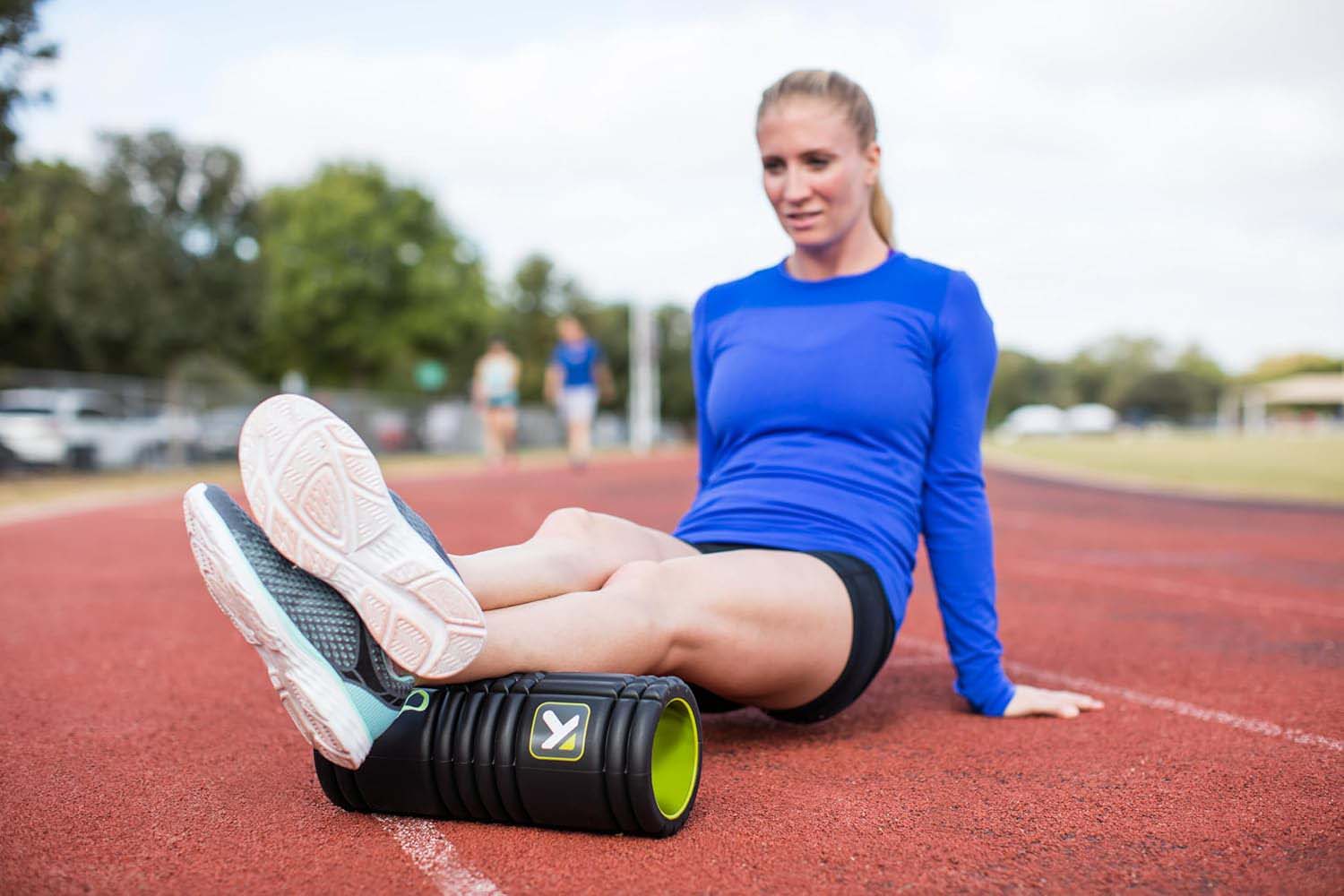
Reduce Soreness and Recover Faster With These Best Foam Rollers for Runners & Cyclists
Don’t ignore that foam roller sitting in the corner of your gym. It’s one of the most useful recovery tools available. Just five minutes of rolling can reduce soreness, promote blood flow, and improve mobility more effectively than passive stretching. Plus, it costs less than a massage.
If you run, ride, or lift past 35, you know what accumulated tightness feels like. Sore quads when walking down the stairs, hip flexors that won’t relax, and a mid-back that stays tight on long training rides.
Unlike strength work, high-intensity workouts, and structured training, foam rollers won’t fix the underlying cause, but they can quickly reduce the soreness and stiffness that can impact your training.
Research on the nuanced benefits of foam rolling, from impacts on fascia to increasing blood flow, is still emerging. However, short-term improvements such as reduced soreness, improved recovery between sessions, and better range of motion are consistently reported.
One study published in the Journal of Athletic Training found that athletes who foam rolled for 20 minutes after a hard session recovered sprint speed, power, and strength much faster than those who didn’t. There were measurable differences at 24 and 48 hours post-exercise. Most likely, foam rolling increased blood flow and reduced inflammation to yield positive performance impacts.
We’ve tested and used many of the rollers on this list, and regularly use the ones that seemed especially durable and effective. Here are our top picks.
We may earn a commission through our affiliate links at no extra cost to you.
Quick Look: Best Foam Rollers for Endurance Athletes
| TriggerPoint Grid Multi-Density Foam Roller | Textured | $$ | Targeted muscle recovery |
| Amazon Basics High-Density | High-density foam | $ | Beginners and budget shoppers |
| Chirp Wheel | Wheel | $$$$ | Safely targets neck and back |
| RumbleRoller | Textured | $ | Loosens tight muscle knots |
| FITINDEX Vibrating Foam Roller | Vibrating Roller | $$$ | Reduces stiffness pre- and post-workout |
| OPTP PRO-Roller | Soft roller | $$ | Ideal for physical therapy and recovery |
1. TriggerPoint Grid Multi-Density Foam Massage Roller – $76.50

When you’re really sore and tight, smooth rollers don’t always hit the spot. If you need more texture, this TriggerPoint grid roller is our favorite non-vibrating foam roller. It’s also a top choice among athletes and coaches we’ve talked to, especially for recovering after hard workouts.
The multi-density surface (flat zones, ridges, and knobs) lets you fine-tune the amount of pressure. There aren’t any knobs, however, so if you’re looking for the ultimate deep-tissue recovery tool, we recommend the similarly priced RumbleRoller instead.
There are broader flat zones for larger muscle groups and ridged sections for tighter spots on the quads, IT band, and calves. It’s also great for deep tissue recovery after an intense workout, such as HIIT.
At 26 inches, it’s probably too big for an overnight bag. If portability is a priority, you can get a 13-inch version. Otherwise, this TriggerPoint foam roller offers full coverage for bigger and smaller muscle groups.
For endurance athletes looking for a roller that can withstand frequent medium to heavy use, it’s one of the top choices on our list.
2. RumbleRoller Basic Bumpy Foam Roller – $22.00

One of our favorite “sweet spot” rollers, the RumbleRoller Basic Bumpy foam roller delivers targeted and firm relief but isn’t as intense or costly as a vibrating foam roller.
Best for experienced athletes who need more than a standard roller, its firm but flexible bumps dig into tissues aggressively enough to reduce soreness and increase mobility. We find it especially effective on the glutes, hamstrings, and thoracic spine. As you move, the bumps compress and release to mimic a therapist’s hands naturally work on tissues.
Built with a solid EVA foam core, it supports up to 300 lbs. and can withstand frequent, heavy use. Like the TriggerPoint GRID, it’s also highly portable at 13 inches.
If you’re new to foam rolling, a downloadable guide helps you get started.
3. Chirp Wheel XR Acupressure Back Roller Set – $89.99

Standard foam rollers aren’t designed for your back or neck. A gentle alternative to regular foam rollers, the Chirp Wheel delivers deep, effective relief for back and neck tension. A spinal canal cradles the vertebrae while the dense foam applies targeted pressure to the muscles on either side.
Cyclists, who often spend time in a forward-flexed position, often feel tightness in the upper back and thoracic spine that a standard roller can’t always effectively address. You can use it on the floor, in a chair, or even braced against a wall.
Since it’s so specialized, the Chirp Wheel isn’t for everyone. It’s not recommended as a daily full-body roller to target general aches and pains. You pay more for this set than you would for a standard roller, but if back or neck tightness are persistent issues, it may be worth the investment.
4. OPTP PRO-Roller Soft Density Foam Roller – $59.99

If you find textured rollers too intense or are new to foam rolling, the OPTP PRO-Roller is our top choice. The lower-density EVA foam delivers even, gentle pressure that’s forgiving on sensitive areas, including the IT band and tight hip flexors.
Unlike textured rollers, it’s not a tool for digging into tight muscles. Instead, think of it as a recovery method for relaxing, stretching, and gentle release. Hard rollers can cause you to tense up against the firmness and pressure. Not the OPTP roller.
Versatile enough for Pilates, yoga, balance work, and myofascial release, it’s also useful for back rolling in a supine position. Available in a full-length 36-inch size, this roller offers lasting performance with a comfortable, supportive feel.
5. FITINDEX Vibrating Foam Roller – $79.99

Vibrating foam rollers fill a unique slot in the foam roller hierarchy. They’re ideal for targeted recovery and deep-tissue massage, but can be a little intense for daily use and beginners.
We’ve found the FITINDEX vibrating roller most useful after hard sessions, such as heavy leg days and race efforts, and when muscles feel too fatigued for general foam rolling.
The vibration increases bloodflow more effectively than static pressure, which reduces lingering soreness and boosts mobility. You can choose between five intensity levels, ranging from 1500 to 3200 RPM, for custom relief. The lower settings are gentle enough for sensitive areas and pre-workout loosening, while the higher settings cater to post-workout recovery.
Compact and weighing just 3 lbs., this roller is easy to carry in a training bag. It’s USB-C rechargeable and lasts over two hours per charge.
6. Rollga PRO – $49.99

At first glance, the Rollga PRO looks different from other foam rollers. Instead of a round and flat or textured surface, it has a unique curved profile. As you roll, the curves cradle delicate and hard-to-reach areas like the joints and spine, delivering targeted pressure.
If you want a deeper, more effective massage experience, the Rollga PRO is a solid compromise. It’s more targeted than the OPTP and less intense than the RumbleRoller.
For athletes seeking relief from back pain after long rides or runs, or who want to prioritize areas that can get missed with a standard roller, the Rollga PRO is worth considering. However, its shape and density may be too much for beginners.
Ideal for yoga, Pilates, strength training, and recovering from spin bike intervals, it boosts flexibility and supports physical therapy routines. It’s durable and light for easy use at home, in the gym, or when traveling.
7. Amazon Basics High-Density Foam Roller – $18.09

Like training, not every foam rolling session has to be intense. Especially right after a hard or long workout, when your muscles might be too sore for aggressive pressure.
That’s where a smooth, high-density option like this Amazon Basics roller comes in handy. Unlike textured rollers, this one delivers pressure evenly across muscles rather than targeting specific spots, which makes it more comfortable for acute soreness.
At this price, it’s also ideal if you’re new to foam rolling and haven’t built up tolerance for more texture or firmer surfaces. Learning the proper technique is easier on a softer surface. You may choose to stick with this softer roller or add a textured roller to the mix.
If you need a roller to loosen tight knots, we recommend the TriggerPoint Grid 1.0 or RumbleRoller over the Amazon Basics foam roller. But if you want an entry point into the world of foam rolling recovery, it’s one of our favorites.
Foam Roller FAQs
What Are the Different Types of Foam Rollers?
You might be familiar with the smooth foam roller, which offers gentle pressure and caters to beginners. However, textured rollers can dig deeper into tight spots. Vibrating rollers boost circulation and recovery but can be pricey.
Which Are the Best Foam Rollers for Runners?
As a runner, your goals might be to boost recovery, improve mobility, or relieve muscle tightness. Key muscle groups such as the hamstrings, calves, and quads can become sore with repetitive stress. You can choose between textured, smooth, or vibrating rollers to get relief. Options such as the RumbleRoller or TriggerPoint GRID promote myofascial release and recovery. Beginners may opt for a soft roller.
Are Smooth or Bumpy Foam Rollers Better?
If you’re a beginner, recovering from injury, or have sensitive muscles, a smooth roller can be ideal. For tight knots or more advanced relief, consider a textured roller.
Which Are the Best Vibrating Foam Rollers?
Most vibrating foam rollers have similar intensities. Some, like the FITINDEX vibrating roller, feature multiple zones to target different areas. If you’re interested in portability, consider the TriggerPoint Grid 1.0 foam roller.
Can You Use a Foam Roller on Your Back or Neck?
When used correctly, foam rollers can be safe for the back and neck. The Cleveland Clinic recommends lying on your back with the foam roller under your upper back. With your feet planted, lift your body into a bridge position and slowly roll along the middle of your back to your lower neck.
Steady Athlete Newsletter
Train smarter. Perform better.
Expert-backed training, nutrition, and recovery insights for athletes 35+. Designed for your busy life, not a 22-year-old’s schedule. Subscribers also get free exclusive guides like the Race Day Fuel Cheat Sheet for Masters Athletes.
Get the Newsletter
Response
[…] Tabata, and themed rides✓ Strength & Bodyweight: Guided circuits, core, resistance bands, foam rolling, and total-body workouts✓ Yoga & Meditation: Stretching, mindfulness, and recovery […]