Featuring Molly Schmelzle, CSCS · Running Rabbit Endurance
Winter is the opportunity season — if you know how to use it.
Part 1 of our Train Smarter Series discusses how to build a strong aerobic base and stay motivated during the winter. Part 2 covers essential fueling with practical winter nutrition strategies from a registered dietitian. Part 3 focuses on why strength training matters and why winter is the best time to lift heavier.
“Winter is a wonderful opportunity to embrace the off-season,” says Molly Schmelzle, a certified strength and conditioning coach and personal trainer who works with runners and cyclists. “It’s a chance to wisely step away from specific and structured training — to reframe, recover, and reset.”
But that doesn’t mean structured training should stop, she says. “It lessens to a degree, and is fortified with more time to build strength, address injuries, explore other movement modalities, and engage in other life matters.”
For athletes who aren’t 25 anymore, that framing matters. The race season demands specificity. Over winter, you can address things that get ignored when the stakes are higher and build the foundation for resilient spring training.
Here’s Molly’s time-tested approach.
We may earn a commission through our affiliate links at no extra cost to you.
Train Smarter Series
Read the Full Series
- Building a Strong Winter Base
- Smarter Winter Nutrition for Endurance Athletes
- Winter Strength Training for Durability and Power ← You are here
- How to Reintroduce Intensity Without Undoing Your Winter Work
- Fuel Smarter: Race-Day Nutrition for Busy Masters Athletes
- Hydrate Smarter: What Masters Athletes Get Wrong About Water, Electrolytes, and Performance
- Move Smarter: Stiffness After 40 Isn’t Inevitable
Why Winter Is the Best Time to Lift Heavier

Most endurance athletes underestimate how strength training can boost their performance — and miss the right time of year to develop it.
Without the pressure of race-specific training, winter allows athletes to progress toward heavier loads that build the tendon, ligament, and muscular integrity that lighter training doesn’t reach.
Lifting heavier also improves bone density — a particular concern for cyclists and athletes over 40.
“If your body has integrity, heavier lifting supports movement economy and long-term durability,” says Molly. “But if the off-season is a re-entry into resistance training, start with an anatomical adaptation phase first. Build the foundation before adding load.”
When (and How) to Lift Heavier During Winter Strength Training
Start with a weight you can lift comfortably 12-15 times and rebuild movement patterns before increasing load.
When you’re ready, progressing toward approximately 80–90% of your maximum can help improve strength, increase time to exhaustion, and protect against common running and cycling injuries. This TrainingPeaks article is a useful resource for endurance athletes who want to safely resistance train without compromising performance.
“Like endurance training, strength gains depend on recovery,” Molly explains. “You have to give the body time to adapt. Respecting muscle preparedness for strength gains is key.”
Not sure when to lift heavy and when to back off? It may be worth consulting a professional. “I always recommend working with a trainer to learn technique, movement patterns, and training principles,” she says.
Foundational Moves That Matter Most for Endurance Athletes
To stay strong over the winter, Molly recommends mastering four foundational patterns:
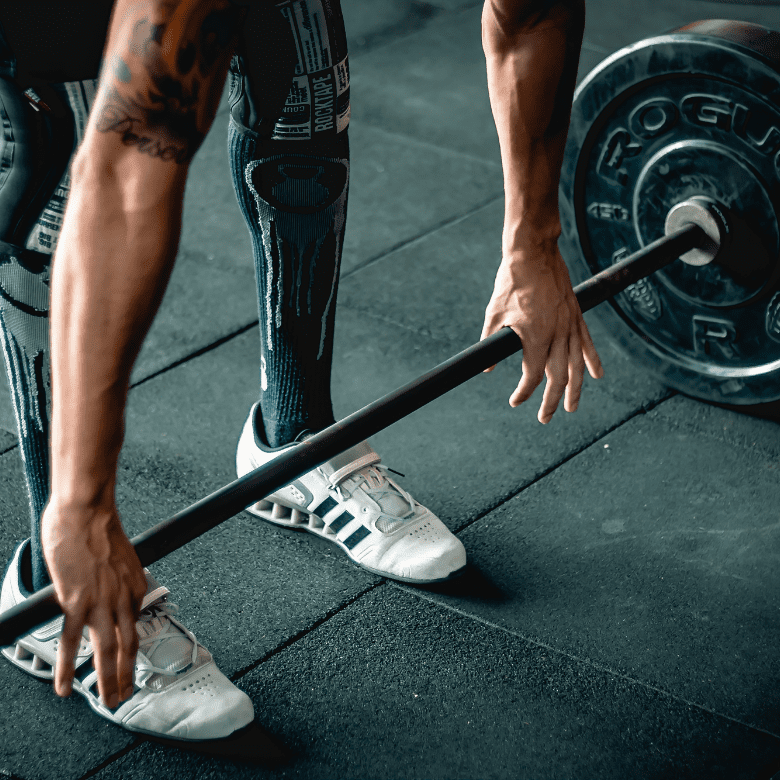
- Hip hinge progressing toward a deadlift
- Split squat variations
- Single-leg progressions
- Core stability work
Each one addresses something the others don’t: posterior chain strength, bilateral imbalances, unilateral control, and the ability to maintain tension under load when fatigue sets in.
“Hinging is one of the most important patterns to learn,” she explains. “A dialed-in technique strengthens the posterior chain and stabilizes the back and pelvis, which transfers to enhanced athletic performance and injury prevention.”
Plus, it helps with balance. “Maintaining balance is crucial as we age. If it isn’t trained, we slowly lose it.”
Single-leg and split-stance work matters for the same reason. “Running is a single-leg sport,” Molly says. “Cyclists benefit too. Isolating each side helps correct imbalances and improve coordination.” If you’re training at home, use adjustable dumbbells or try kettlebells for leg-specific workouts. A plyo box can also help with muscle-building exercises.
Why Strong Feet, Ankles, and Hips Matter
Weak links don’t announce themselves until they become problems. For endurance athletes returning to higher loads in winter, the feet, ankles, and hips absorb the impact and stress before the rest of the body catches up.
“Feet are the foundation,” Molly explains. “If the foundation is weak, everything up the chain pays for it.”
Walking barefoot, doing toe yoga, and rolling the underside of the feet with a Neuro ball or similar tool all restore the natural mechanics that supportive footwear can gradually suppress. Barefoot lifting helps too, where possible.
For ankles, double and single-leg calf raises at various tempos work the full foot and ankle complex. Seated raises target the soleus; standing raises target the gastrocnemius. “Real strength happens while loading the tissue with weight,” Molly says.
Tight hips create compensation patterns at the knee and lower back — two of the most common complaint sites in endurance sport. A frog pose with active holds and a seated 90-90 with windshield wiper leg movement keep joints within their strong active range.
Building Power Without Burning Out

Power isn’t just for sprinters. For endurance athletes, it’s essential for climbing hills, surging, accelerating, and staying strong when fatigue builds.
The key is introducing power in a smart way after steady base training.
“Power training can be intense on the body,” explains Molly. If your training relaunch is “close to the basement”, it’s best to start conservatively. “Small doses go a long way.”
For runners, she suggests short hill strides layered into easy runs. These brief efforts reintroduce intensity while keeping overall impact lower than flat sprinting. Over time, stride duration can gradually increase as tissues adapt.
And for cyclists, climbing is a great way to build power and endurance. “Hills are your friend early on,” she explains. “They build strength and cardiovascular efficiency while naturally limiting speed.”
If bad weather is forcing you indoors, consider an indoor bike trainer with hill simulation to prepare for outdoor climbs.
Sprinting and maximal efforts can wait until your body is truly ready for hard intervals and strides. “Sprinting demands full recovery and well-prepared tissues,” explains Molly. “There’s no rush to get there.” Otherwise, you’re on the path to early-season breakdown.
Reintroducing Impact Without Inviting Injury

High volumes of repetitive endurance training improve fitness but don’t automatically build durability. When strength work drops off during race season, tissue tolerance quietly erodes.
Impact itself isn’t the problem. It’s adding it too quickly, without adequate preparation.
“Think of it as controlled exposure,” says Molly. “You’re teaching tissues how to tolerate load again.”
Start with low-level plyometric and isometric work, such as hopping drills, jump rope, wall sits, plank holds, to rebuild elasticity and neuromuscular coordination without overwhelming the system.
Save more aggressive plyometric work until strength and movement quality are well established.
If higher-impact work still feels like too much, cycling, rowing, swimming, and skiing all build power with less mechanical stress. “All these activities count,” Molly says. “You don’t have to do everything on your feet.”
How Mobility Supports Stronger, More Efficient Movement

Mobility work doesn’t need to be complex or time-consuming, but as athletes age it becomes a “non-negotiable workout variable,” explains Molly.
And if basic stretching or mobility work feels stale, it’s OK to mix it up and have fun.
“Explore movement with a childlike curiosity,” she suggests. “Dance. Feel what joints need extra attention, what movements prime the pump, what needs stabilizing.”
That might mean using movement in new and exciting ways.
“Maybe your warm-up is dancing. Being able to explore movement and readiness isn’t just an opportunity to play. It’s an opportunity for joy.”
With more time to experiment, winter is the right time to develop that kind of awareness. A joint-by-joint approach using foam rollers for recovery, a set of resistance bands, isometric holds, or positional work is a solid starting point. If it resonates and produces a felt benefit, use it consistently.
The goal isn’t extreme flexibility. It’s maintaining active control through available range of motion so joints move efficiently under load rather than compensating around limitations.
“Having a passive range of motion close to an active joint range of motion is an injury prevention measure,” Molly explains. Especially for older athletes.
Scale Recovery with Training

When training demands increase, recovery must scale with them. Recovery is part of the training process, not something you squeeze in when time allows.
As author Brad Stulberg emphasizes, stress plus rest equals growth. Molly applies that same logic to how she structures training. “Training is a recovery-led process,” she says. “Gains are made when the body isn’t continually under stress. Let it grow.”
She encourages athletes to establish a post-workout routine and adjust it based on session intensity and duration.
Cool down gradually rather than stopping cold. Refuel within 60 minutes post-workout. Rehydrate consistently throughout the day. Protect your sleep.
It also means building recovery into the structure of the training week. “Remember to recover between intervals,” Molly says. “And take a full day off every microcycle — roughly every 7 to 10 days.” Low-effort movements, like short hikes or easy swims, count.
It’s also OK to step away entirely after major training blocks.
“Take a couple of days completely off and let the body soak in the hard training work. It’s okay to step away for a day or two.”
What you eat can also play a role in your recovery. To recover faster, you can also try a scoop of whey protein powder for speedy post-workout repair.
“Both recovery and strength work build capacity. That’s what keeps athletes healthy and performing well over the long term.”
Get the Complete Toolkit
Molly’s Spring Athlete Toolkit offers a complete strength blueprint with progressions and loading patterns, a joint protection guide, and full plyometric progression with specific drills, sets, and timing.
→ Subscribe to Steady Athlete for free and get the toolkit in your inbox.
Meet Molly Schmelzle
Owner and head coach of Running Rabbit Endurance, Molly blends science-driven training with a passion for lifelong fitness. Her background in elite team sports and endurance athletics, plus certifications in strength and conditioning, personal training, and health coaching, helps athletes build strength, resilience, and performance far beyond race day.
Have a question for Molly or want to connect?
| Instagram @runrabbitwood | |
| Email molly@runningrabbitendurance.com | |
| YouTube @Cascade_Running_Rabbit |
Steady Athlete Newsletter
Train smarter. Perform better.
Expert-backed training, nutrition, and recovery insights for athletes 35+. Designed for your busy life, not a 22-year-old’s schedule. Subscribers also get free exclusive guides like the Race Day Fuel Cheat Sheet for Masters Athletes.
Get the Newsletter