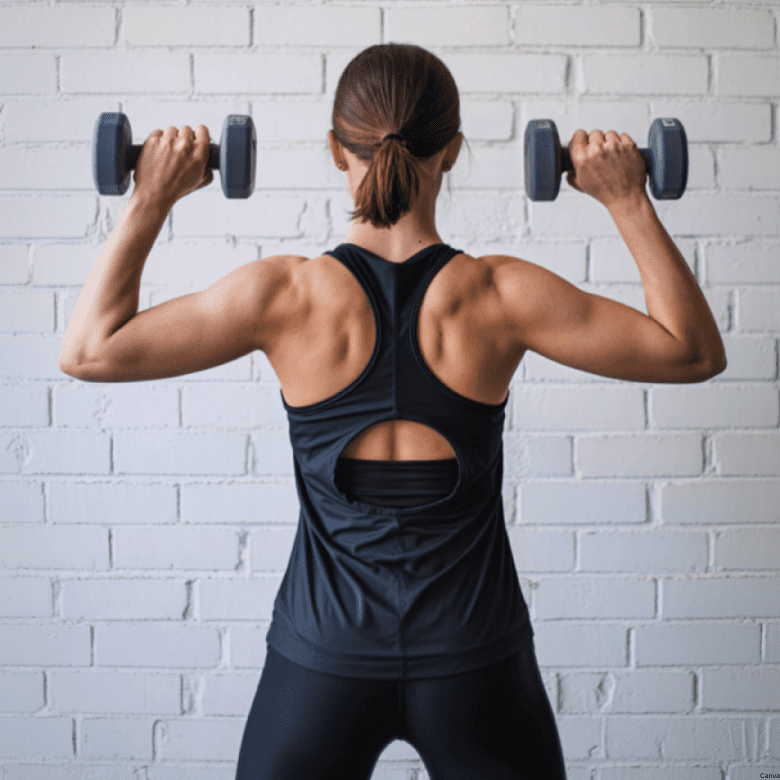
Strength imbalances impact many runners and cyclists, but you might not be aware of it until you get injured.
Sneaky signs show up gradually, such as sudden knee pain at mile 18 or a lower back that tightens on longer rides. By then, the imbalance has usually been there for years.
Running and cycling are repetitive, single-plane activities that build specific muscles effectively. Without strength training, this is where gaps happen.
Adjustable dumbbells work arms and legs independently, so your stronger muscles can’t compensate for the weaker ones. It’s how you fix asymmetries that can derail your training.
“Running is a single-leg sport,” says Molly Schmelzle, CSCS. “Cyclists also benefit from efficient push and pull through each leg. Maintaining balance is crucial as we age. If it isn’t trained, we slowly lose it.”
This guide covers the best adjustable dumbbells for endurance athletes training at home, what to look for before you buy, and the specific exercises that deliver the most return for runners and cyclists.
We may earn a commission through our affiliate links at no extra cost to you.
Quick Look: Best Adjustable Dumbbells for Endurance Athletes (2026)
| Dumbbells | Weight Range | Best For | Skip If You… |
|---|---|---|---|
| PowerBlock Elite EXP | 5–50 lbs. | Most endurance athletes; small spaces | Need 50+ lbs. |
| BowFlex 1090 SelectTech | 10–90 lbs. | Steady progression; fast circuit changes | Are on a budget |
| SNODE AD80 | 10–80 lbs. | Heavy progression; quieter operation | Want quick adjustments |
| Core Fitness Adjustable | 5–50 lbs. | Small spaces; apartment training | You need 60–90+ lbs. |
| CAP Barbell ADJUSTABELL | 5–25 lbs. | Budget buyers; durability | Need 25+ lbs. |
Why Adjustable Dumbbells Matter for Endurance Athletes
As runners and cyclists, we often target major muscle groups such as the glutes, hamstrings, and quads. But for endurance athletes, consistent strength training helps improve movement efficiency and increase power.
Effective strength training goes beyond the legs. A strong core helps stabilize your body, while a strong upper back and shoulders help you breathe efficiently and maintain posture on long runs and rides.
Adjustable dumbbells address this in a way that barbells and machines don’t. Each side works independently, which can quickly expose weaknesses. There’s no dominant side to pick up the slack. Since you can change weight quickly between exercises, they’re practical for quick 20–30 minute strength sessions during busy weeks.
Research shows a direct performance advantage. One study comparing cyclists who added heavy strength training to those who didn’t found improvements in leg strength, power, and finishing ability — roughly 6% improvement in sustainable power over a 40-minute performance test, without changes in aerobic capacity.
Schmelzle summarizes the broader picture. “Strength training is more than throwing around heavy weights. A holistic resistance training program may include mobility, conditioning, athleticism, hypertrophy, strength, and power. Resistance training is important to longevity and the long-term health of an endurance athlete.”
You can use adjustable dumbbells to get stronger in the off-season and maintain a balanced strength training program during peak racing season. For a well-rounded fitness routine, you can also incorporate these full-body resistance band exercises into your schedule to build strength and stability with a low-impact workout.
3 Exercises That Boost Power and Reduce Injuries for Runners and Cyclists
Guidance from Molly Schmelzle, CSCS
Not all strength exercises are useful for endurance athletes. Schmelzle identifies four movements that address the specific weaknesses running and cycling create, and how you can use them to enhance performance and prevent injuries.
1. The Deadlift (Starting With the Hinge)
“One of the most important movement patterns to master is a proper hinge leading into a well-executed deadlift,” Schmelzle says. “Hinging is fundamental for strength development and is foundational for everyday movement. A dialed-in technique strengthens the posterior chain and stabilizes the back and pelvis — all of which transfers to enhanced athletic performance and injury prevention.”
Start with a Romanian deadlift using light dumbbells to establish the hinge pattern before adding load. Most endurance athletes have the leg strength to progress quickly here but lack the posterior chain coordination, which is the gap deadlifts fill.
2. Split Squat Variations
“Split squat variations are a great means to train biomechanical imbalances, work hip and pelvis internal rotation, and exercise in the space between bilateral and unilateral movements,” says Schmelzle. She specifically recommends the rear-elevated split squat (Bulgarian split squat) as “a time-efficient gem that focuses on the glutes with less strain on the joints.”
Start with bodyweight to dial in form and technique. Depending on your comfort and training background, you can hold dumbbells held at your sides, chest, or in a single-arm offset position for different challenges.
3. Single-Leg Progressions
Schmelzle outlines a progression for single-leg strength: start with a single-leg box sit-to-stand to train eccentric and concentric actions. Progress to a single-leg deadlift for glute and pelvis stability, then advance to marches — sometimes called Lady Liberties — where you hold a weight overhead while simultaneously driving up legs. “This leaves a strong foot and ankle to support the body and overhead weight,” she notes.
Dumbbells are ideal for these progressions — they allow offset loading that increases the stability demand without the coordination challenge of a barbell.
What to Look for in Adjustable Dumbbells
Adjustability
Dial-based systems (BowFlex, PowerBlock) allow faster weight changes between exercises, which is useful for circuit training and supersets. Pin-and-plate systems (CAP Barbell, SNODE) are more durable, with fewer moving parts. Either works for endurance athletes training 2–3 times per week with moderate rest between sets. We suggest dial-based for EMOM or AMRAP-style sessions with frequent weight changes.
Weight range
For most endurance athletes doing unilateral work, 50 lbs. per dumbbell is sufficient for steady progression. Heavier ranges (up to 90 lbs.) matter more for bilateral movements like Romanian deadlifts or bent-over rows with significant load. If you’re primarily training for endurance performance over strength development, don’t overbuy on weight range.
Footprint and storage
Adjustable dumbbells replace a full rack but still need floor space. Block-style designs (PowerBlock) are the most compact. Dial-based designs (BowFlex) are bulkier. If you’re training in a small apartment or shared space, footprint is a priority.
Handle type and feel
Knurled handles feel more stable during single-leg work and overhead pressing. Smooth handles are fine for controlled movements but become a liability during more dynamic exercises, especially with sweaty hands.
Best Adjustable Dumbbells for Endurance Athletes (2026)
PowerBlock Elite EXP Adjustable Dumbbells ($449.00): Best for Endurance Athletes

For runners and cyclists seeking a practical long-term investment, PowerBlock Elite EXP dumbbells are hard to beat. They’re compact, easy to adjust, and expandable if you want to progress gradually without upgrading your equipment.
The block-style design can be polarizing, and some dynamic movements may feel awkward. The 50-lb. maximum can also limit stronger athletes.
However, adjustments are quick between sets. The relatively compact footprint is also ideal for single-leg work (such as split squats and step-ups) that benefits endurance athletes.
These PowerBlock dumbbells are small-space-friendly, easy to store, and durable enough for frequent use. They’re a great investment for endurance-focused strength training.
BowFlex Results Series 1090 SelectTech Dumbbells ($699.00): Best Premium Dumbbells

Featuring a weight range from 10 to 90 lbs. per dumbbell, the BowFlex Results Series 1090 suits a variety of athletes. They’re not cheap, but you get a durable piece of equipment that can help you progress and challenge yourself over time.
Weight changes are fast with the intuitive adjustment dial. For endurance athletes, the biggest upside is efficiency. You can move quickly through circuits or supersets without breaking rhythm, which keeps your heart rate elevated during strength sessions.
They’re costly and bulky, though, which is something to consider if you’re on a budget or don’t need such a wide weight range. You’ll need more room to store them than with compact systems like PowerBlock.
If you don’t need that much weight, the BowFlex 552 Dumbbells range from 5-52.5 lbs. and are highly rated for their ease of use and durability.
SNODE AD80 Drop-Proof Adjustable Dumbbells ($948.60): Most Durable

Not a fan of bulky adjustable weights? The SNODE AD80, available with and without a rack, has a rounder, sleeker design but is fully adjustable.
Featuring cast iron plates that feel solid and balanced, the knurled handles also provide a steady grip even with sweaty hands. It also has a generous 10-80 lb. weight range that’s ideal for steady progression.
If you train during off-hours or in shared spaces, the integrated grip and first plates prevent the handles from rattling and making more noise. The “drop-proof” design, including balanced round plates and a sturdy iron cradle, lets you exercise with confidence.
Adjustments are slower than with dial-based systems, but that may not be a dealbreaker for endurance athletes lifting 2–3 times per week.
Core Fitness Adjustable Dumbbell Weight Set ($429.99): Best for Small Spaces

If space is tight, the Core Fitness adjustable dumbbells are compact and easy to store when not in use.
The selector mechanism makes weight changes quick and easy, which is ideal for circuit-style strength training. You may incorporate weighted exercises to build power and endurance. It’s also convenient for short sessions with little rest time between sets.
A 5-50 lb. weight range gives you lots of options for progression and improvement. For most endurance athletes, 40–60 lbs. per dumbbell is more than sufficient for unilateral strength training. However, strong athletes might find the Core Fitness adjustable dumbbells limited for heavy progression. Some competitors offer higher weights.
CAP Barbell ADJUSTABELL Round Dumbbell Weights ($169.99): Best Budget Adjustable Dumbbells

You can replace expensive gym fees with at-home strength training with the CAP Barbell ADJUSTABELL set. This budget-friendly set features a 55-lb. limit and a plate-loaded design that’s basic and easy to maintain.
Like other budget weights, the adjustment system isn’t as polished or quick as more premium options. But for most endurance athletes, it’s plenty for effective strength work.
Long-term reliability is also a highlight. There’s little that can break, and replacement plates are easy to find.
How to Fit Dumbbell Training Into an Endurance Schedule
Strength training should support your primary sport, not compete with it. Instead of maximum strength gains, the goal is to build and maintain the structural fitness that keeps your running and cycling sustainable.
Two 20-30-minute sessions per week covers most of what endurance athletes need. The ACSM recommends muscle-strengthening work for all major muscle groups at least twice per week.
Here are some suggestions across all training phases:
- Aim for 8–12 reps per set for most unilateral exercises
- Avoid training to failure — you need to recover for your next run or ride
- Reduce strength volume during peak racing blocks but don’t eliminate it
- Prioritize single-leg and hip hinge work
Frequently Asked Questions
What are the best adjustable dumbbells in 2026?
For runners and cyclists looking to improve performance, we highly recommend dumbbells like the budget-friendly CAP Barbell ADJUSTABELL and the SNODE AD80.
Are adjustable dumbbells worth it for runners and cyclists?
Yes. Adjustable dumbbells can help runners and cyclists identify and correct imbalances and prioritize unilateral exercises that build strength and endurance.
How heavy should adjustable dumbbells be for endurance athletes?
As a general rule, start with a weight you can comfortably lift up to 15 times. You can gradually increase the weight as you get stronger.
Will adjustable dumbbells damage my floors?
Between the heavy weight and repeated movements, it’s possible that adjustable dumbbells can scratch or damage floors. We suggest using an exercise mat or a weight rack for proper storage.
Steady Athlete Newsletter
Train smarter. Perform better.
Expert-backed training, nutrition, and recovery insights for athletes 35+. Designed for your busy life, not a 22-year-old’s schedule. Subscribers also get free exclusive guides like the Race Day Fuel Cheat Sheet for Masters Athletes.
Get the Newsletter