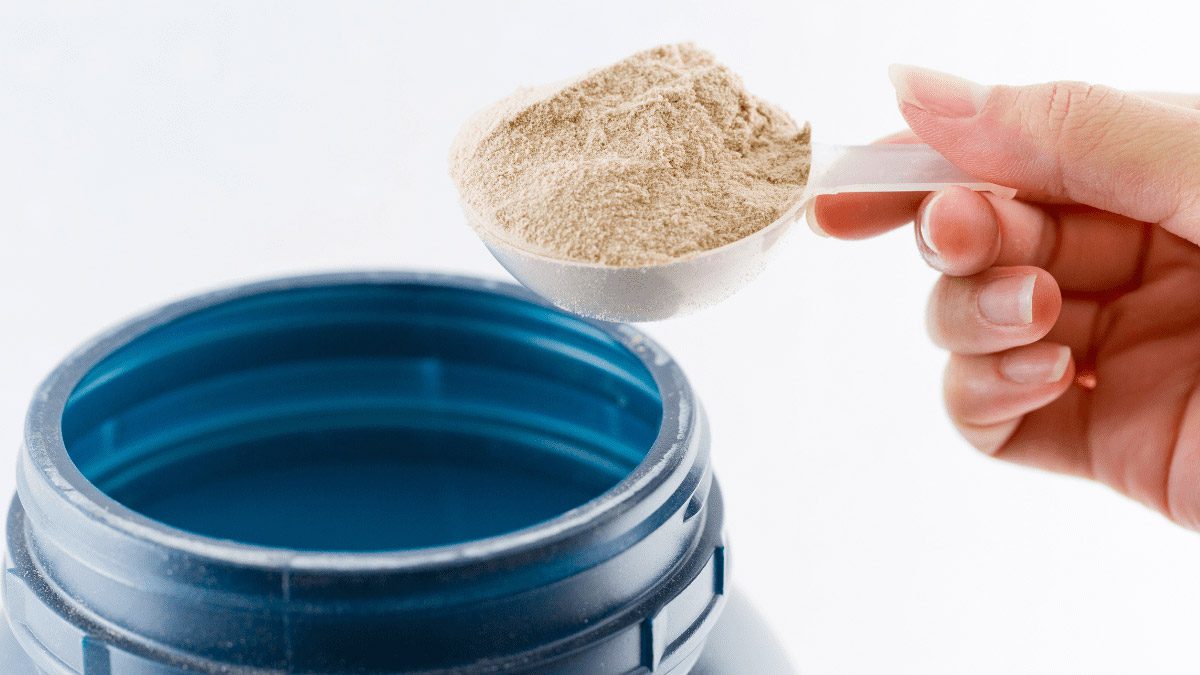
For busy runners, it’s easy to skimp on protein. You finish a long run with no appetite, and by the time you’re hungry, your workday has already started.
Eating smaller amounts of protein over a day is more effective than one large serving at dinner. But family obligations, full work days, and post-workout appetite suppression can make it harder to consistently hit your daily protein goals.
This matters more after 35. Muscle becomes less responsive to protein with age, though consistent training offsets much of that decline. The intake that maintained muscle in your 20s may not be enough after 40.
Protein powder can’t replace a well-structured diet. But it’s a simple and convenient solution for getting enough protein when sitting down to eat isn’t realistic.
Anthony DiMarino, RD, CPT — registered dietitian, certified personal trainer, and SteadyAthlete contributor — explains what matters most when choosing a protein supplement for endurance training. These recommendations are based on absorption speed, amino acid profile, and recovery timing for runners specifically.
We may earn a commission through our affiliate links at no extra cost to you.
Related
Already know what you need?
Jump to our top picks for runners 35+, from whey isolates to plant-based blends.
See the Full ListProtein Types at a Glance
| Type | Digestion | When to Take It | Best For | Watch For |
|---|---|---|---|---|
| Whey isolate | Fast (60–90 minutes) | After hard efforts and long runs | Fast recovery; highest leucine content | Concentrate has more lactose; choose isolate if dairy-sensitive |
| Casein | Slow (several hours) | Before sleep | Overnight repair during high-mileage blocks | Less useful right after a run |
| Plant-based blend | Varies by blend | After runs or between meals | Dairy-free and vegan runners; GI sensitivity during heavy training | Choose a blend over single-source pea for a fuller amino acid profile |
How Much Protein Do Runners Actually Need?
Probably more than you’re currently eating, especially if you’re over 35.
General endurance guidelines suggest 1.2–1.6g of protein per kilogram of body weight per day. But for masters athletes training and racing seriously, that number increases.
Marni Sumbal, MS, RD, CSSD — board-certified sports dietitian, author of Essential Sports Nutrition, and 22x Ironman finisher — recommends 1.8g per kilogram of body weight daily for athletes 35 and older, slightly above what’s typically recommended for younger athletes.
That’s roughly 30g of high-quality protein per meal, spread throughout the day. Consistent protein intake supports muscle repair and recovery better than loading up at dinner. The timing and distribution matter as much as the total.
Protein Requirements By the Numbers
On heavy training days and during high-mileage blocks, DiMarino notes that needs can reach 2.0g/kg or above, especially when carbohydrate availability is restricted and amino acids are drawn on more heavily for energy.
Runners training at moderate mileage should aim for 1.6–1.8g/kg of current body weight, suggests Sumbal. Runners doing marathon or high-mileage training should aim for 1.8–2.0g/kg. On rest and recovery days, 1.6g/kg is a reasonable goal. Protein needs don’t disappear when training load drops.
After a workout, DiMarino recommends at least 0.5g of protein per kilogram of body weight within 60 minutes after hard efforts. For a 70kg runner, that’s around 35g, more than a single egg or a small snack delivers. Most protein powders provide 20–30g per scoop, so after your hardest sessions, pair a scoop with food or use a scoop and a half.
“Consider your goals and specific needs first and foremost,” says DiMarino. “What works for your training partner may not work for you, especially if your mileage, recovery demands, or digestion differ.”
Which Protein Type Is Right for Your Training?
Not all protein powder is the same. The absorption speed, amino acid profile, and digestibility of different protein types make them better suited to different recovery scenarios.
Whey isolate is ideal for fast recovery. DiMarino describes whey as “the most complete and bioavailable protein source” for runners prioritizing fast recovery and muscle repair after demanding workouts. It absorbs quickly, within 60–90 minutes, which makes it effective right after a run. It’s also higher in leucine than most plant-based options. Leucine is the amino acid that signals muscle repair to start.
Whey comes in three forms:
Concentrate: Most affordable, but contains more lactose
Isolate: Higher protein, lower lactose; the better choice for runners with mild dairy sensitivity
Hydrolysate: Pre-digested, easiest on the stomach
Casein digests slowly over several hours, releasing amino acids gradually rather than in a single surge. That makes it less useful immediately after a run and more useful before sleep, especially during high-mileage training blocks when overnight repair matters.
Plant-based blends (pea, rice, chia, or combined formulas) are ideal for dairy-free and vegan athletes, and for runners who experience GI distress with whey during heavy training. DiMarino notes that some athletes tolerate plant blends better during high-volume blocks when digestion becomes more sensitive. A blended formula covers more of the essential amino acid profile than a single-source pea protein, which matters for runners using it as a primary recovery source.
Ready to buy?
We’ve ranked our top picks in each category, from fast-absorbing whey isolates to plant-based blends for sensitive stomachs.
See the Best Protein Powders for Runners
Dialing in your fueling beyond protein? See our best energy gels for runners.
What to Look for Before You Buy

Ingredient Quality
Look for short ingredient lists with minimal additives. If you’re sensitive to artificial sweeteners, avoid products with added dextrins, maltodextrins, or artificial sugars.
Third-Party Testing
Some protein powders contain heavy metals such as lead or cadmium. Look for certifications such as:
- NSF Certified for Sport
- Informed Choice
- Clean Label Project
These indicate the product has been independently tested for safety and label accuracy.
FAQ
Which type of protein powder is best for runners?
It depends on your recovery timing and GI sensitivity. Whey isolate is ideal for post-run recovery since it’s fast-digesting and contains high levels of leucine to support muscle repair. Plant-based blends are great for dairy-free or vegan athletes, and anyone who experiences GI issues with whey during heavy training. Casein is useful during high-mileage blocks. Most runners benefit from having whey after a run and casein or plant-based for general recovery.
How much protein do masters runners need?
Standard endurance guidance is 1.2–1.6g per kilogram of body weight per day. For masters athletes training seriously, Sumbal recommends 1.8g/kg as a daily target. That’s roughly 30g of high-quality protein per meal throughout the day. During heavy training blocks, DiMarino notes needs can reach 2.0g/kg or more. Spreading intake across meals is more effective for muscle repair than concentrating it at dinner.
When should runners take protein powder?
DiMarino recommends at least 0.5g of protein per kilogram of body weight within 60 minutes after hard sessions. For a 70kg runner, that’s around 35g. Before sleep during high-mileage blocks is the second most useful window, especially for casein. Protein intake on easy and recovery days also matters, since the repair process continues beyond hard workouts.
Is it safe to use protein powder every day?
Daily use is fine for most athletes as long as total intake stays within appropriate ranges. DiMarino notes that up to 2.0–2.5g per kilogram of body weight per day is considered safe for active individuals, depending on overall health and training load. Protein powder is a supplement to a well-structured diet, but whole food sources still provide micronutrients and fiber that powders don’t.
What should I look for in a clean protein powder?
Clean protein powders have short ingredient lists and little to no added sugar or artificial flavors. Look for options with third-party testing, such as NSF Certified for Sport or Informed Choice.
Does protein matter more during perimenopause and menopause?
Yes. As estrogen declines, the body doesn’t build or maintain muscle from protein as easily, which makes hitting your daily target more important. If recovery feels sluggish or body composition continues to change despite consistent training, it’s worth examining your protein intake. A good resource is a sports dietitian who understands the balance between perimenopause or menopause and performance.
Meet Our Contributor
Anthony DiMarino is a registered dietitian and personal trainer from Cleveland. Through Eat Move Improve, he helps people build healthier habits, stay motivated, and create lasting lifestyle changes beyond quick fixes.
Steady Athlete Newsletter
Train smarter. Perform better.
Expert-backed training, nutrition, and recovery insights for athletes 35+. Designed for your busy life, not a 22-year-old’s schedule. Subscribers also get free exclusive guides like the Race Day Fuel Cheat Sheet for Masters Athletes.
Get the Newsletter