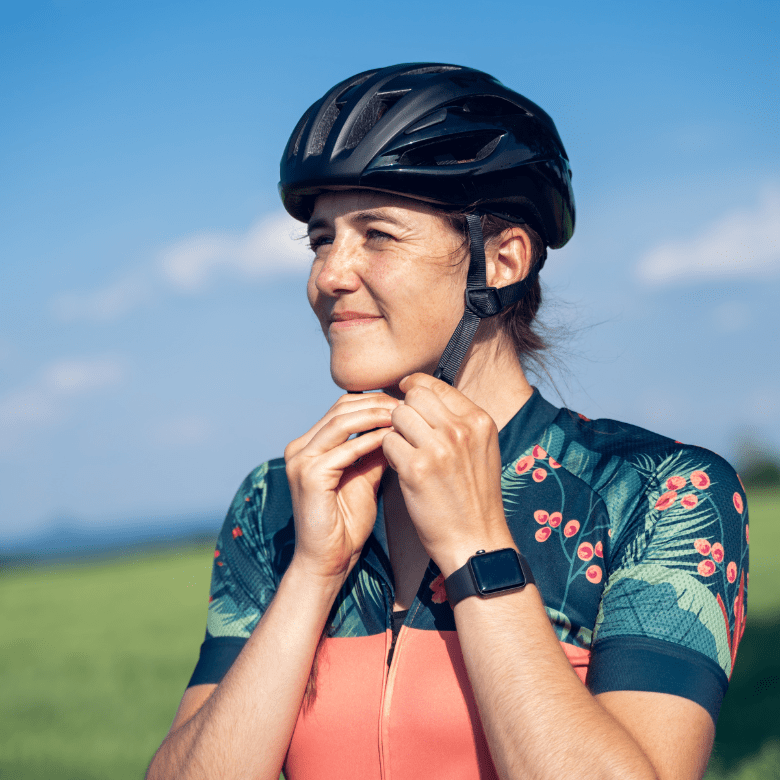
Each time you ride a bike, you’re trusting your balance, reflexes, and some luck to stay safe. But there’s one safety tool you shouldn’t leave behind: your bike helmet. It can be the difference between walking away from a crash and sustaining a life-changing injury.
Backed by research and insights from a board-certified neurologist, we break down how helmets protect your brain, which features matter most, and why fit matters as much as design. Let’s make bike helmet safety a habit, not an afterthought.
About the contributor: Our expert is a board-certified neurologist practicing at a top-3 hospital worldwide (Newsweek 2025) and a top-20 U.S. hospital (US News 2025–2026). He has reviewed published research on helmet-related injuries and has seen the consequences of riding without protection.
We may earn a commission through our affiliate links at no extra cost to you.
Key Takeaways: What You Should Know
- Helmets save lives. They can cut fatal cycling head injuries in half and reduce the severity of many others.
- Two kinds of protection:
- Cushioning direct hits (linear impact) to prevent skull fractures and bleeding.
- Reducing twisting (rotational) forces that can cause diffuse axonal injury, a type of widespread brain damage.
- Cushioning direct hits (linear impact) to prevent skull fractures and bleeding.
- Not all helmets are equal. Innovative designs like MIPS, WaveCel, SPIN, and airbag helmets can offer better protection in certain crashes.
- Fit matters more than price. A well-fitted, regularly worn midrange helmet protects better than a high-end one gathering dust.
- Replace after a crash or every 3 to 10 years, based on manufacturer guidance.
- Helmets don’t protect everything. Your face, jaw, and limbs are still at risk. Safe riding habits and good infrastructure are essential.
- Some groups are less likely to wear helmets, including children, older adults, and shared e-scooter users.
- E-bikes and e-scooters mean higher speeds, making helmets more important.
A Short History of Bike Helmets

- Pre-1970s: Leather “hairnet” helmets offered minimal protection.
- 1975: Bell Auto Parts released the first polycarbonate shell helmet with foam inside.
- 1984: ANSI set the first US helmet standards.
- Today: Helmets are lighter, more aerodynamic, more comfortable, and safer.
What Helmets Do Well

Helmets can take the brunt of an impact and reduce linear acceleration with front, side, and rear impacts to the head. While standard helmets offer some protection against twisting forces during a crash, newer designs aim to reduce these forces even more to help prevent certain types of widespread brain injury.
This can help:
- Prevent skull fractures and brain bleeding.
- Reduce some concussions.
- Protect against dental fractures.
- Limit diffuse axonal injury (damage from the brain twisting inside the skull).
💡 One study estimated that half of cyclists who died could have survived if wearing a helmet, and one-third of serious injuries could have been less severe.
What Helmets Can’t Do
Helmets don’t prevent:
- Cuts, scrapes, or bruises.
- Facial injuries (including jaw fractures).
- Broken bones in your arms, shoulders, or wrists.
That’s why safe riding habits and good infrastructure matter too.
Are All Helmets the Same?

Not exactly. Differences include:
- Advanced tech: MIPS, WaveCel, SPIN, and airbag designs aim to reduce rotational forces.
- Impact performance: Some helmets excel at front/rear impacts, others at side impacts.
- Price ≠ guaranteed performance: Even affordable MIPS helmets outperform expensive ones.
- Materials: Thicker foam, thinner shells, and strategic reinforcements can improve protection.
Bottom line: Pick a helmet that protects against both linear and rotational forces, fits well, and you’ll actually wear.
When to Replace Your Helmet
- After a major crash or visible damage (like cracks).
- Every 3 to 10 years (check your manufacturer’s advice).
- If you ride daily or in full sunlight, plan to replace it more often.
Comfort = Consistency

If it’s uncomfortable, you won’t want to wear it.
Look for:
- Lightweight materials
- Good ventilation
- Easy adjustability
Try before you buy. It should cover your forehead, feel snug without giving you a headache, and stay put when you shake your head.
Who’s Less Likely to Wear a Helmet?
Research shows lower usage among the following groups:
- Children and teens.
- Older adults.
- E-scooter riders (especially on shared devices).
Outreach programs, including giving free or subsidized helmets in schools, community centers, and emergency departments, have been shown to boost use.
💡A particular consideration in children is ensuring an appropriate size, as they grow quickly. Used helmets may not always fit well and may have unseen damage that makes the helmet less effective.
Around the World: A Global Perspective
- Ireland: 62% of cyclists wear helmets, thanks to effective bike safety campaigns.
- Denmark: Helmet use in children rose from 33% to 79% without mandatory laws, thanks to education and infrastructure.
- Singapore: In one study, only 31.3% of 272 cyclists who presented to an emergency room wore a helmet.
- China: A national bike helmet safety campaign boosted helmet use from 8.8% to 62%.
- Netherlands & Sweden: Bike helmet use is as low as 5% in the Netherlands and up to 40% in Sweden.
E-Bikes & E-Scooters: Higher Risk

These can hit higher speeds than regular bikes, meaning more force in a crash.
Studies consistently show:
- Helmeted riders spend less time on ventilators and recover better.
- Usage rates are low, especially for shared e-scooters.
- Intoxication is more common in e-scooter crashes.
The Bottom Line: Which Helmet Is Best for You?
A helmet won’t make you invincible, but it can mean the difference between walking away and enduring a life-changing injury. Even better? You can get full protection without breaking the bank. Pricier helmets might be lighter and look sleeker, but they don’t necessarily perform better in real-world scenarios. Just pick a helmet that fits, wear it every ride, and encourage others to do the same.
Steady Athlete Newsletter
Train smarter. Perform better.
Expert-backed training, nutrition, and recovery insights for athletes 35+. Designed for your busy life, not a 22-year-old’s schedule. Subscribers also get free exclusive guides like the Race Day Fuel Cheat Sheet for Masters Athletes.
Get the Newsletter