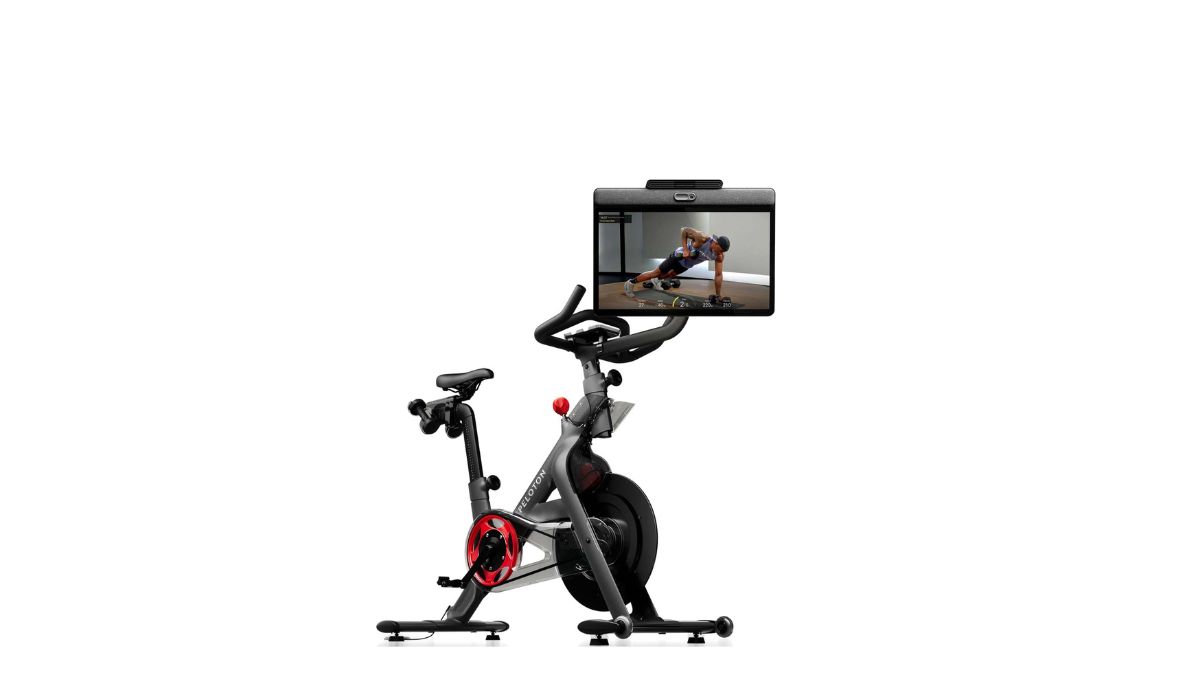
After 6 months of riding—here’s what’s better than the original Bike (and what isn’t).
After our positive long-term Peloton Bike experience, and nearly 4,000 workouts on our original Bike, we decided it was time to upgrade to Peloton’s newest Cross Training Bike+ with Peloton IQ ($2,695).
The Peloton Cross Training Bike+ is Peloton’s most advanced indoor bike, designed to combine cycling, strength, and mobility training into one platform. Unlike previous models, the Cross Training Bike+ uses a built-in camera and AI-powered movement tracking (Peloton IQ) for a more immersive home workout experience.
Premium features, such as a 23.8″ swivel screen, Sonos-tuned speakers, and automatic resistance control, add a studio-quality feel that elevates home workouts.
For full transparency: we bought our unit for $1,995, taking advantage of a $700 discount offered directly through Peloton.
Our Peloton Cross Training Bike Plus review breaks down how it compares to the original Bike after years of real-world use. Here are our initial impressions to help you decide whether the Cross Training Bike+ is worth it.
We may earn a small commission through affiliate links at no extra cost to you.
Why We Upgraded to the Peloton Cross Training Bike+

Consistency & Convenience
As serious cyclists who love riding outdoors when possible, our Peloton helps us stay fit in the off-season. That’s why we really appreciate the structured workouts and guided strength on the Peloton Cross Training Bike+, which makes that studio-level experience easily accessible 24/7.
What We Love Most: Smarter Movement Tracking
For us, the main draw was Peloton IQ, a camera-based movement tracking system that counts reps, checks form, and provides visual feedback without extra sensors. It’s not without some flaws, such as inaccurate rep counts at times and limitations in tight or darker spaces. But for a multi-user household with limited space, that built-in versatility is a huge draw.
Unlike some competitors, like the Tempo home gym, you don’t have to stick with Peloton’s weights for your movements to count. We purchased them because we like the sleek design and the secure grip, but you can use any weights that you have around the house. That includes single and adjustable dumbbells.
The Cost of a Smarter Platform
As Peloton’s ecosystem improves, it gets more expensive. The All-Access Membership now costs $49.99 per month (up from $44).
To Peloton’s credit, the expansion has been notable. This year, Peloton added 12,000+ new classes, 40+ structured programs, personalized training plans, and integrated apps like YouTube, Disney+, and Breathwrk.
These aren’t trivial numbers, which is why the investment is a highly personal one. After 5+ years on the Peloton platform, we still use the bike and classes enough to justify the cost, especially since we don’t have to spend extra on subscriptions like Zwift, yoga apps, or gym memberships to hit our same goals.
If you’re comparing your options, we’ve also tested less expensive Peloton alternatives that deliver strong performance without the premium price tag.
That said, the membership can feel bloated if you only use Peloton for one discipline, such as cycling. In that case, $49.99 per month may feel too steep for features you rarely touch. If this sounds familiar, a no-subscription exercise bike might be a better choice. But for those committed to full-spectrum training, it remains one of the most cost-efficient platforms available.
Reliability & Trust
Reliability also played a major role in our upgrade decision. Our original Peloton Bike lasted thousands of rides without issue, despite heavy, consistent use. We’re optimistic the Cross Training Bike+ will match or exceed that longevity.
Major Drawback: Screen Stability Issues
Our original Peloton held up surprisingly well over five years of frequent, heavy use, which is why we had high expectations for the new Peloton Cross Training bike series. Unfortunately, our hands-on testing has raised concerns about the build quality of the Cross Training Bike+.
The Screen Wobble Issue
If you’re sensitive to screen movement, or simply don’t want to pay a premium price for a bike with a noticeable flaw, this section is for you. In this case, movement means a significant wobble that gets worse during harder efforts, including standing sprints.
A little side-to-side movement is normal on swivel screens. But the Peloton Bike+ screen wobble feels more like a structural issue than a minor design tradeoff. We also noticed it on the Peloton Cross Training Bike, although it’s less pronounced. Probably because the screen on the base bike is slightly smaller.
The good news is you can tilt and adjust the screen to reduce the wobbles. It’s not a perfect fix, but we’ve found that tilting the screen up when we’re riding minimizes excess screen movement. That’s also a more natural angle for pedaling.
Peloton’s support team suggested tightening all components, which we tried. It didn’t resolve the problem.
It also doesn’t appear to be isolated. Instructors’ Cross Training Bike+ units show visible screen movement during high-intensity efforts, and several early owners have reported similar stability concerns in community discussions, particularly during high-resistance or standing rides.
On a machine at this price, it’s especially disappointing since the screen is the centerpiece of both cycling and floor-based Cross Training sessions.
Creaking Handlebars & Pedal Squeaks
In our years of testing and riding indoor bikes, we’ve embraced the slight creaks and squeaks that most bikes produce. Even our reliable Peloton Bike had an occasional handlebar squeak. But after a month of consistent use, our Peloton Cross Training Bike+ has developed an increasingly loud squeak in the right pedal.
In short, this isn’t what we expect from a premium machine at this price point, and these early issues contrast sharply with the dependable feel of our original Bike.
Early quality impressions matter, especially for a premium brand. Hopefully Peloton fixes this issue.
In the meantime, if you’re sensitive to screen stability or prefer not to spend over $2,000 on a bike with a serious design flaw, this is something you should know before you buy.
We’ll continue testing over the next few weeks and update this review as we log more strength, cycling, and mobility sessions.
What’s New & What’s Familiar

Similar Feel, Smarter Details
If you already own a Peloton Bike+, the Cross Training Bike+ will feel familiar in many ways. The fundamentals, such as automatic resistance, premium build quality, and responsive software, remain the same.
That said, the Cross Training Bike+ refines the experience with meaningful upgrades. We appreciate the more comfortable seat and thoughtful touches like a built-in fan and phone holder to elevate the home indoor bike training experience.
Peloton IQ: The Headline Upgrade
By far, the biggest advancement is the integration of Peloton IQ, the camera-based movement tracking system that counts reps, checks form, and offers instant feedback during off-bike strength sessions.
Early Impressions: Accurate, but Can’t Replace a Coach
In our testing, IQ performed accurately for most familiar exercises, especially those with clear movement patterns. However, some floor-based movements, such as oblique crunches or neutral-grip chest presses, weren’t always detected.
Lighting and space can also influence performance, similar to our Tempo Move experience. The system’s form cues (like “keep thighs parallel”) can feel formulaic, but they’re useful for reinforcing good habits if you already understand the basic mechanics.
It’s far from perfect, but Peloton invites basic feedback and input at the end of some classes. You can rate experiences with movement tracking and form feedback as negative, positive, or somewhere in between. To us, it’s an encouraging sign that Peloton cares about its user experience and will hopefully continue to improve.
Note: Full camera-based tracking is only available on the Cross Training Series (Bike+, Tread+, Row+). However, some older Peloton hardware is getting IQ software updates. You can take the classes but can’t access movement tracking unless you’re on the Cross Training Series Bike+ with the built-in camera.
Hands-On First Impressions
Our Cross Training Bike Plus review includes in-depth testing of the platform’s cycling, strength, and mobility workouts. If you want basic strength workouts to pair with your indoor rides, these guided resistance band workouts are a great place to start.
Here are some of our key takeaways:
- Movement tracking: Recognizes basic form inconsistencies and offers helpful corrections. Best for users familiar with the movements.
- Space requirements: Peloton lists 8’ x 6′ for Row+ bootcamp/floor workouts, but 5–6′ in front and 2–3′ on the sides is sufficient. Bike footprint: 54″ L × 22″ W (approx. 4′ x 2′).
- Apartment-friendly design: Great for tight spaces or shared rooms.
- Household versatility: Supports multiple users training in different disciplines.
- Intuitive & responsive: Seamless switching between cycling, strength, and mobility workouts.
Peloton Cross Training Bike+ vs. Original Peloton Bike: Key Differences
Wondering if you should upgrade your current Peloton Bike or buy a Peloton for the first time? The differences between the Cross Training Bike+ and the original Peloton Bike matter more than the marketing suggests.
Both bikes use Peloton’s All-Access Membership, but they’re built (and priced) for very different training priorities.
Key Differences at a Glance
Peloton Cross Training Bike+
- Built-in camera with Peloton IQ movement tracking
- Designed for cycling and off-bike strength/mobility sessions
- Swivel screen optimized for floor workouts
- Higher upfront cost
- Requires full All-Access Membership to unlock its value
Original Peloton Bike / Bike+
- Cycling-first experience with optional strength classes
- No movement tracking
- Simpler, more stable hardware design
- Lower upfront cost (especially refurbished units)
- Better value if you primarily ride
Who Should Choose the Cross Training Bike+?
If you consistently ride, strength train, and do mobility work, the Cross Training Bike+ makes a lot of sense. It’s also a top choice if you want guided workouts with real-time feedback. Peloton’s big library continues to expand, making it worthwhile if you want a streamlined platform instead of multiple fitness subscriptions.
Who Should Stick With the Original Peloton Bike?
Stick with the original Peloton Bike or Bike+ if you’re focused only on cycling and don’t want or need advanced hardware. You can also avoid wasting money if you rarely use floor-based strength or mobility classes. It’s also a less expensive solution if you’re budget-conscious and don’t need movement tracking.
Is the Peloton Cross Training Bike+ a True Upgrade?
If you’re looking for an improved ecosystem over a revolutionary leap, Peloton’s Cross Training Bike+ is an upgrade. For multi-discipline athletes, the added versatility and movement tracking can justify the cost. For pure cyclists, though, the original Peloton Bike still delivers nearly everything that matters. And if you want newer equipment without movement tracking, the Peloton Cross Training Bike is a good option.
Is the Peloton Cross Training Bike+ Right for Me?
If you’re a cyclist, endurance athlete, or home workout fanatic seeking a single platform that unites cardio and strength training, the Peloton Cross Training Bike+ can be a great investment. For new Peloton users, think of the Cross Training Series as a long-term investment that scales from off-season conditioning to year-round strength work.
For strength sessions off the bike, these recommended resistance band sets are an easy, space-saving way to round out your training.
Maybe Wait If…
- You already own the original Bike or Bike+ and mostly ride, rarely doing strength or mobility sessions.
- You’re budget-conscious and hesitant to spend a lot on incremental upgrades.
- You expect a hardware revolution. This is an evolution, not a reinvention.
Heart of the Experience: Cycling, Strength, and Recovery

With its premium features and movement tracking capabilities, the Cross Training Bike+ is more robust than most wallet-friendly Peloton alternatives. Power zone rides, structured interval sessions, and perceived effort tracking help you balance intensity and recovery.
For more off-bike conditioning, here’s a closer look at different interval training styles like HIIT, Tabata, and EMOM. If you’re riding, pairing the bike with a reliable heart rate monitor can make zone training and recovery work even more effective.
During winter months or when outdoor training is limited, the bike can keep fitness gains consistent. We love this long-term adaptability, which makes it a worthy investment for a healthier future.
If winter is your main indoor training season, our base-building guide explains how to balance endurance, strength, and recovery more effectively.
FAQ
Q: Is the Cross Training Bike+ worth upgrading from the Bike or Bike+?
A: Only if you’ll consistently use the tracking features or share it with other users. Pure cyclists and budget-conscious consumers may not see enough value.
Q: Will there be an upgrade kit for older bikes?
A: Not yet. Camera-based tracking is exclusive to the Cross Training Bike+, Tread+, and Row+.
Q: Can it replace other home gym equipment?
A: For many users, yes. You can ride, lift, stretch, and track progress in one machine.
Our Take on the Peloton Cross Training Bike+
The Peloton Cross Training Bike+ feels like a smart, well-balanced upgrade for athletes who train across multiple disciplines (i.e., cycling, strength, and mobility). However, it’s not worth upgrading if you’re satisfied with your current Bike or Bike+ or don’t need movement tracking.
Early takeaways:
- Seamless integration between cycling and strength sessions creates a more cohesive training experience.
- Flexible setup makes it ideal for small spaces or shared households with multiple users.
- Smarter software and camera tracking show real promise, hinting at Peloton’s next phase: a more adaptive, data-aware training ecosystem.
Steady Athlete Newsletter
Train smarter. Perform better.
Expert-backed training, nutrition, and recovery insights for athletes 35+. Designed for your busy life, not a 22-year-old’s schedule. Subscribers also get free exclusive guides like the Race Day Fuel Cheat Sheet for Masters Athletes.
Get the Newsletter